Cybersecurity insight · Malaysia
Supermarket fridge cyberattacks: lessons for Malaysian businesses
What Europe’s supermarket refrigeration attacks mean for Malaysian businesses that depend on connected equipment.
What has been confirmed?
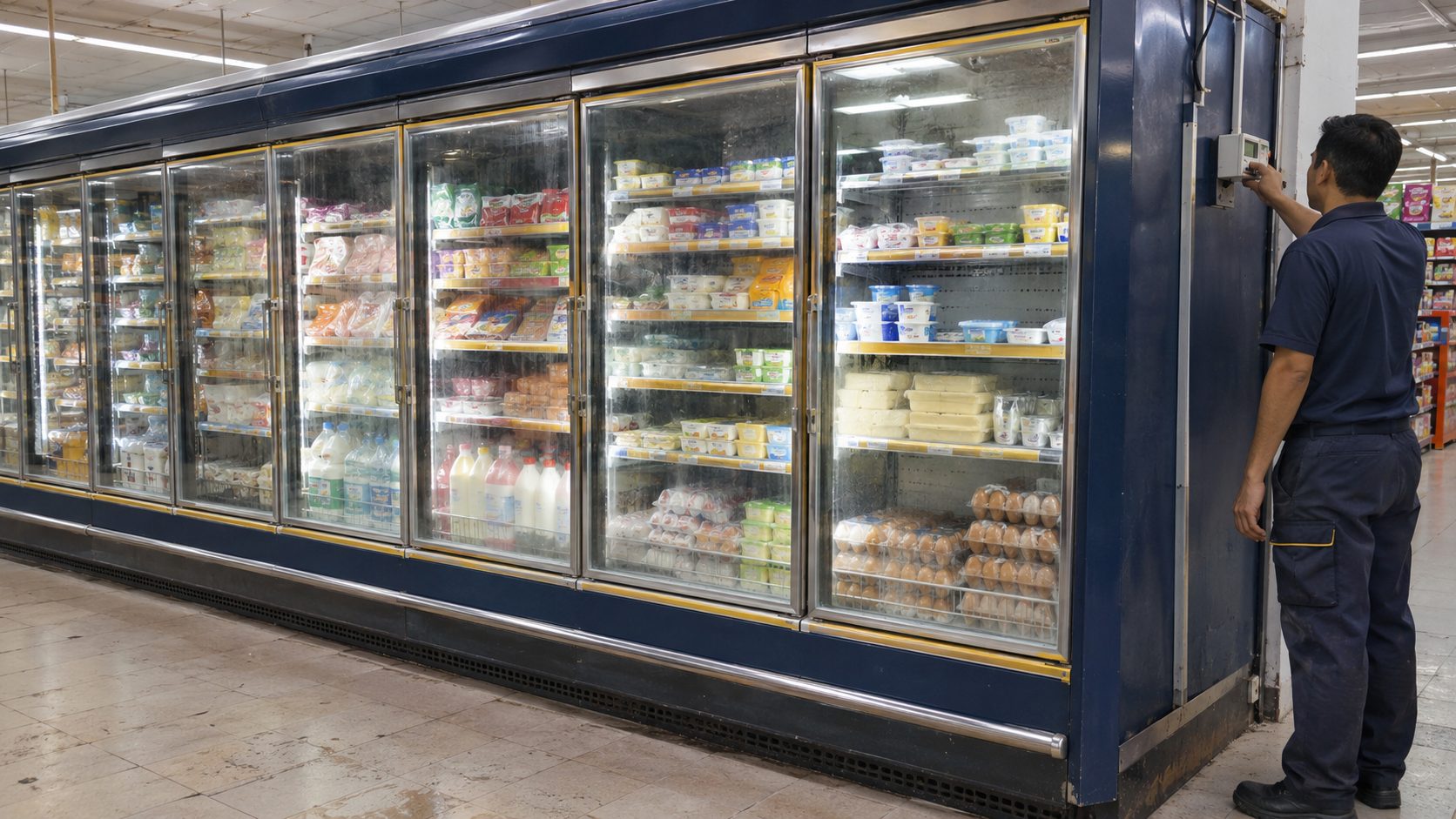
European supermarkets have experienced cyber incidents affecting refrigeration systems. In its 4 November statement, ENISA confirmed incidents dating from 11 October and a further wave on 1–2 November 2026. Authorities were investigating and urged organisations to reduce exposure. [1]
CERT-FR issued an alert about compromised remote refrigeration controllers. The alert was subsequently expanded and updated. [2]
A new wave affected European refrigeration systems, prompting a coordinated EU response. [1]
AFP reported on 2 November that stores in at least seven European countries experienced disruption, with food discarded because it had spoiled or might have spoiled. It cited reports of 50°C temperature settings at particular stores. These are attributed reports, not a measured temperature for every affected unit. [3]
Keep the facts in proportion. The sources reviewed do not establish a common attacker or motive. This article does not assign responsibility, give a final loss estimate, or claim that a matching attack has occurred in Malaysia.
The risk sits behind the appliance
A refrigeration controller is part of operational technology (OT): equipment that monitors or controls a physical process. A compromised management interface can put operations at risk even when office computers appear to work normally.
CERT-FR identifies compromises involving Danfoss AK-SM and AK-SC controllers and Copeland/Dixell xweb systems. Its guidance prioritises removing public internet exposure, checking configuration, using protected remote access, and applying manufacturer hardening. A reset alone leaves unsupported equipment vulnerable. [2]
Do not assume that changing a mobile connection from 4G to 5G resolves this risk. The business review needs to examine access paths, identity controls, supported software and network rules, regardless of the connection type.
Ask who can change a critical setting.
Then ask who would notice.
Why Malaysian businesses should pay attention
For a Malaysian retailer, food distributor, cold-storage operator or hospitality business, the practical question is whether connected equipment has an uncontrolled route into its management functions. Location alone does not answer that question.
Consider a business with branches, shared vendor credentials and remotely managed cold rooms. An unauthorised settings change could create stock losses, downtime and food-safety decisions. This is a planning scenario, not a report of a local incident.
Bring IT, operations, procurement and the refrigeration contractor into the same review. Confirm who owns the controller, the router, software updates, alarm response and recovery. Include franchise and branch arrangements where responsibilities differ.
Six checks to put on the agenda
Use these as a discussion checklist. Your equipment manufacturer and qualified OT or refrigeration specialist should validate changes before they affect live cooling or safety functions.
Map the equipment
Record controllers, gateways, software versions, support dates and responsible vendors at each site. Ask for a diagram showing remote connections and management access.
Close unnecessary exposure
Ask your authorised network team to identify publicly reachable management interfaces and remove unnecessary access. Coordinate changes with operations so essential monitoring remains available.
Control vendor access
Use a protected remote access route, individual accounts and multi-factor authentication where supported. Limit permissions and access periods, and keep logs of remote sessions.
Separate critical systems
Review separation between guest Wi-Fi, office devices and equipment networks. Permit only the connections needed for operation and support. Test that network rules actually enforce the intended separation.
Plan updates and replacement
Confirm the manufacturer’s current guidance. Schedule supported updates with a rollback plan. Budget to replace unsupported controllers; resetting a device does not remove its underlying weaknesses.
Test alarms and recovery
Check that an abnormal temperature or settings change reaches a responsible person after hours. Keep approved configurations and recovery instructions, and rehearse escalation with the equipment vendor.
These recommendations apply the exposure and recovery principles in CERT-FR’s alert to a business review. [2] Equipment-specific procedures and implementation need an agreed scope.
If something looks wrong, protect the operation first
- Alert operations and the refrigeration specialist. Follow the site’s food-safety procedures and assess affected stock using approved methods.
- Coordinate containment. Have the authorised IT and equipment teams restrict suspicious remote access while preserving essential monitoring and safe local operation.
- Preserve evidence. Record times, alarms, setting changes and relevant logs where safe. Let the response team decide on resets or restoration.
- Use the right reporting channels. Cyber incidents can be reported or escalated through MyCERT’s Cyber999 service. Follow your organisation’s incident plan and applicable reporting obligations. [4]
Where Ark IT Global fits
AIG’s published services include network design, firewall protection, endpoint protection, backup and managed IT support. A practical starting point is an initial discussion about the network boundary, vendor access and support responsibilities around your connected equipment. [5]
Refrigeration controls, safe operating settings and equipment recovery need your manufacturer or qualified specialist. Any AIG work on the surrounding infrastructure should be scoped with those teams. No single product or review guarantees prevention of a cyberattack.
Questions business owners ask
Does this mean refrigeration systems in Malaysia have been attacked?
This article does not establish a matching Malaysian incident. It uses verified European events to help Malaysian businesses review their own exposure.
Is a firewall enough?
A firewall is one layer. Access rules, accounts, equipment support, monitoring and recovery arrangements also need attention. Configuration and operational testing matter.
Should we disconnect all connected equipment immediately?
Coordinate with your authorised IT team and equipment specialist. Remove unnecessary exposure while maintaining safe operation and required monitoring. An unplanned disconnection can interrupt alarms or vendor support.
Can AIG provide a formal OT audit?
AIG’s published initial review is a high-level IT and security discussion. Confirm specialist requirements, qualified delivery resources and a separate scope before commissioning a formal OT assessment.
Sources & editorial notes
Reviewed on 5 November 2026. Incident reporting can develop. Official alerts support the technical guidance; AFP supplies attributed reporting on store impacts. Malaysia-focused scenarios and the review checklist are editorial recommendations.
- ENISA: Joint statement on cyber incidents in refrigeration systems across the EU4 November 2026. Official confirmation of incident waves and coordinated response.
- CERT-FR: Security incident targeting remote refrigeration controllersFirst issued 12 October; updated 16 October 2026. Affected families, exposure reduction and recovery guidance. French-language source.
- AFP: Fridge cyberattack hits supermarkets across Europe2 November 2026. Reported geographic spread, stock disposal and particular stores’ temperature settings.
- MyCERT: Cyber999 reporting channelsOfficial Malaysian service for reporting or escalating computer security incidents.
- Ark IT Global: Networking & CybersecurityPublished service scope and distinction between an initial review and a formal assessment.
Sources above distinguish confirmed incident reporting from practical recommendations.